

Why Artisans Matter More Than Ever
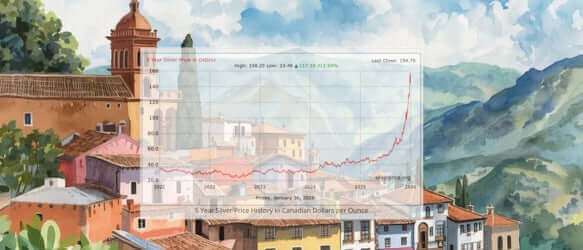
Jewelry is often called a luxury. But across human history, beauty has never been optional. We adorn ourselves to express identity, dignity, love, heritage, and belonging. That’s why the current rise in silver prices is not just a market story—it’s a human story.
In Taxco, Mexico, a town internationally recognized for its silversmithing, the recent surge in silver prices is creating instability across the entire ecosystem: artisans, workshops, retailers, and families. This article brings together testimonies from Taxco silversmiths and the leadership of the Consejo Regulador de la Plata (Taxco Silver Regulatory Council), to show what’s happening—and why it matters.
Voices included in this article:
-
Angélica Arteaga
Chair of the Consejo Regulador de la Plata in Taxco and host of the weekly local radio program La Voz del Consejo -
Valentín Castañeda
Taxco artisan interviewed on La Voz del Consejo -
Jesús Castañeda
Taxco artisan interviewed on La Voz del Consejo -
Daniel Gutiérrez
Taxco silversmith (interview) -
Carlos Ortega
Taxco silversmith (interview)
Why Silver Prices Are Rising (and Why Taxco Feels It So Strongly)
The silver price increase is not being driven by artisans. As Angélica Arteaga explains on La Voz del Consejo, what Taxco is experiencing is connected to global demand and global uncertainty.

She highlights three core forces:
- Industrial demand is massive. Silver is heavily used in technology and innovation—electronics, equipment, and solar panels. Arteaga notes that jewelry represents only around 20–22% of global silver consumption, while a much larger share is absorbed by industry.
- Demand is outpacing supply. Mining output cannot always scale fast enough to meet physical demand, which pushes prices higher.
- Economic and geopolitical tensions increase investment in metals. When large investors move money out of currencies and into precious metals like silver and gold, prices can jump quickly.

The result is volatility—especially when the price rises sharply in a short period. Angélica Arteaga notes that in just a few months, silver increased dramatically (in some cases more than 100%), creating destabilization for those who rely on it for their livelihood.
Taxco’s Identity: Silver as Culture, Work, and Pride
Taxco is more than a production center—it is a cultural identity built around the craft.
Carlos Ortega, a Taxco silversmith, describes the trade as his very essence. Growing up around major workshops, he associates silversmithing with family, home, and pride—especially the pride of seeing Taxco-made pieces exported worldwide.
Daniel Gutiérrez, another Taxco silversmith, frames this identity through history. He credits Taxco’s transformation to the influence of William Spratling, the visionary who helped push Taxco silver into a new era of design and international recognition. For Daniel, remaining a silversmith today is not only work—it’s a commitment to keeping an extraordinary tradition alive.
“Taxco is history… a 100% artisan silversmith town… It’s an honor—an honor that liquid silver runs through my veins.” — Daniel Gutiérrez, silversmith (interview).
The Immediate Impact: No Sales, Rising Costs, and Workshops Closing
When silver becomes expensive and unstable, the first sector hit is the artisan workshop.
On La Voz del Consejo, Valentín explains that Taxco depends heavily on artisans and workshops—yet now many are facing an extreme reality: no sales.
“The most affected are the artisans and workshops… We don’t have sales. Some artisans—even family members—have closed their workshops in recent weeks.” — Valentín, artisan (interview with Angélica Arteaga on La Voz del Consejo)
This isn’t only about price. It’s about unpredictability. Valentín describes the problem clearly: you buy silver at one price, you produce during another, and you try to sell when the price has shifted again.
Angélica Arteaga emphasizes this volatility by describing how rapidly prices can change in a single weekend. That kind of swing makes planning nearly impossible for small workshops with fixed household and operating expenses.
Meanwhile, Carlos Ortega describes the human side: when work slows down, savings disappear—but bills keep coming. He even began exploring other income sources, simply to cover necessary expenses.
When Survival Means Leaving the Bench: Jesús Castañeda’s Story
One of the most direct examples of pressure is the decision to stop producing—not because the artisan has lost skill, but because restarting later can be incredibly difficult.
On La Voz del Consejo, Jesús Castañeda shares that he chose to close his workshop temporarily to protect what he still has.
“I chose to close my workshop… It’s very difficult to start again. Last week I had to work at a hotel doing maintenance—things I’d never done before.” — Jesús Castañeda, artisan (interview with Angélica Arteaga on La Voz del Consejo)
His story reflects what many artisans face: when the market destabilizes, silversmithing can’t always cover daily life—even if the craft is the artisan’s entire identity.
The Ethical Risk: When Rising Silver Prices Incentivize Misrepresentation
A silver crisis doesn’t only shrink sales—it also creates temptation, and the consequences can be devastating.
Angélica Arteaga, speaking as Chair of the Council, stresses that the town must “evolve responsibly,” and that ethics matter: if you can’t keep producing silver, you may shift to other metals like brass, copper or tumbaga—but you must not deceive customers.
“If we can’t keep working, we might do something else—but we cannot deceive people.” — Angélica Arteaga, Chair, Consejo Regulador de la Plata (on La Voz del Consejo)
Valentín and Arteaga describe a growing problem: items marked 925 that are not truly sterling silver—lower-grade silver or even plated pieces sold as silver.
That matters because Taxco’s reputation is part of its economic survival. If buyers lose trust, everyone pays the price—especially honest artisans.
What the Consejo Regulador de la Plata Does (and Why Certification Matters)
To protect quality and consumer confidence, the Consejo Regulador de la Plata in Taxco provides verification services that help artisans and the jewelry community confirm whether a piece meets quality standards.

Silver Regulatory Council — a guarantee of quality and authenticity.
Angélica Arteaga explains why this is essential: some people sell silver without being involved in production or alloying. Without verification, they may not truly know what they are selling—or worse, they may knowingly sell lower-quality metal as silver. That becomes a serious issue for both consumers and the town’s long-term credibility.
Angélica’s weekly program, La Voz del Consejo, exists in part to inform both artisans and buyers, and to encourage more Taxco silversmiths to get certified, so customers can identify trustworthy sources and Taxco can maintain its standards.
Handmade Silver Isn’t “Per Gram”: Why Taxco Can’t Be Compared to Mass Production
A key message repeated by Angélica, Valentín, and Jesús is that artisan jewelry cannot be judged like factory output.
Angélica Arteaga notes that handmade jewelry is not always priced simply per gram, because many pieces are made without molds and require hours of skilled finishing.
Jesús Castañeda illustrates this with his experience making rosaries: machine-made alternatives may be cheaper, but they are not equivalent in silver quality or repairability.
“I make rosaries by hand… It’s more complex. Others make them by machine and the silver isn’t the same… People don’t want to pay the difference—especially now with the silver increase.” — Jesús Castañeda, artisan (on La Voz del Consejo)
They also discuss a practical difference buyers rarely consider: well-made Taxco silver can often be repaired, reused, and even melted down and reworked with confidence—because the artisan knows the metal’s quality.
Daniel Gutiérrez: Adapting Without Losing the Soul of the Work
Daniel brings another layer: even artisans with a distinct signature style are being forced to rethink their creative direction.
Daniel describes himself as an artisan known for “large works”—heavy pieces, sculptures, vessels, bold designs. With silver now dramatically more expensive, he feels pressured to shift toward smaller pieces. But he insists that the soul of the work can remain intact:
“Even if it’s a simple little ring, it still carries my essence—my identity, my heart, my love.” — Daniel Gutiérrez, silversmith (interview)
“Sometimes a Piece Is Made With Blood”: What Buyers Don’t See
Carlos Ortega offers a raw reminder of what handmade means:
He explains that in the workshop, injuries happen—fingers get cut by saw blades, and blood can literally stain the metal. His point is not to dramatize, but to underscore that artisan silver carries lived reality: experience, sacrifice, and time.

He also warns about the market: mass-produced jewelry may be cheaper because it is produced in huge quantities and may use lower-quality silver. If silver is expensive, he argues, buyers should demand quality—and understand what “good workmanship” truly involves.
The Biggest Challenge Right Now: “Endure”
For Daniel, the central challenge today is endurance.
He explains that customers are prioritizing food and household survival, and are leaving “small luxuries” behind. The result is a collapse in demand. And even when there is work, buying silver at current prices is difficult—what used to be a manageable purchase (a kilo of silver) becomes a tiny purchase (100 grams) simply to keep functioning.
Daniel believes the situation could last months—or years—and he has watched many artisans leave the trade over time.
At the same time, he maintains cautious optimism: he believes this moment could eventually push Taxco back toward what truly differentiates it—design, craftsmanship, value-added work, and meaning.
What Taxco Needs Now: Quality, Ethics, Certification, and Consumer Awareness
Across every voice in these interviews, one message repeats:
Taxco’s future depends on protecting its credibility.
- Angélica Arteaga emphasizes responsible evolution, ethics, and quality verification through the Council.
- Valentín calls for innovation, improved quality, and realistic pricing that honors labor and material.
- Jesús Castañeda shows how hard the moment is—and why rebuilding later will require protecting what artisans still have.
- Daniel Gutiérrez insists the soul of Taxco silver must not disappear, even if the market forces change.
- Carlos Ortega reminds us that handmade work is human—physical, time-consuming, and deeply personal.
Conclusion: If Beauty Is a Human Need, Supporting Artisans Is Part of Protecting What Makes Us Human
Taxco’s silver crisis is not only about metal prices. It’s about whether a town known worldwide for craftsmanship can survive a global shock without losing its reputation, its workshops, and its next generation of makers.
When a buyer chooses certified, ethically made Taxco silver, they are not buying “luxury", they are choosing continuity—keeping a living craft alive.
And in a world that increasingly mass-produces beauty, the pieces made by human hands become even more precious—not because they are expensive, but because they are real.
A Note from Nueve Sterling
At Nueve Sterling, the realities shared in this article are not abstract to me.
I am committed to sourcing silver jewelry from certified workshops affiliated with the Consejo Regulador de la Plata in Taxco. I believe that certification, transparency, and ethical sourcing are essential—not only to protect buyers, but to help preserve the integrity of Taxco’s silversmithing tradition.
Learn more about Nueve Sterling 👈🏼


